Why Boulder Keeps Misunderstanding Architecture
An op-ed inspired by a conversation with architect Nick Fiore (Flower Architecture)
Boulder has a design problem, and it’s not the one most people think.
On the surface, we love architecture here, the clean-line “mountain modern,” the cedar-and-steel palettes, the expensive windows, the aspirational renderings floating around MLS listings. But talk with someone like Nick Fiore of Flower Architecture, and a different picture emerges: Boulder doesn’t actually understand what makes a good house. Not at a deep level. Not where it matters.
We mistake aesthetics for architecture.
We confuse products for craft.
We think design is what we see, when most of the important stuff is what we don’t.
And if Boulder wants better houses, not just prettier ones, we need to rethink how we talk about this entire process.
Style Isn’t the Point — Judgment Is
In my opinion, Nick refuses to claim a signature style. He’s not trying to be “the modern guy” or “the gable-roof guy” or “the Boulder version of Olson Kundig.” He’s not building a brand aesthetic.
He’s doing something harder: He’s designing spaces people actually want to live in.
Warmth. Privacy. Comfort. Materials that feel honest instead of curated. Homes that work in ways clients might not have even known to ask for.
In an Instagram-fed design culture obsessed with immediate recognition, this is a contrarian stance. And an important one.
Because I think he is right:
A style you can spot from a mile away might be photogenic, but it’s not inherently good architecture.
Style is the residue of good decisions - not the north star.
Builders Shape More Than Boulder Realizes
An observation of his that resonated strongly for me, from the perspective of a builder is something the industry rarely admits: Builders have a massive influence on the final house - often more than the architect.
Not symbolically. Practically.
Drawings answer a fraction of the real questions. The rest - hundreds of thousands of micro-decisions - fall to the GC and subs. How a sill is flashed. How a basement wall is insulated. How a subfloor is installed. These invisible choices determine whether a house squeaks, leaks, rots, breathes, or lasts.
If the architect authors the idea,
the builder authors the experience.
AND I FUCKING LOVE THIS. the ethos of it resonates with my passion for this world of making on such a deep level.
We Over-Engineer the Wrong Things
Boulder’s building-science discourse has gotten loud, and sometimes misguided.
We keep importing systems from wetter, darker, mold-prone climates because they sound smart on paper — even when they provide marginal benefit in Colorado’s bone-dry air. Rain screens, complex layering, overcomplicated assemblies… all good tools when they're appropriate. Often they’re not.
I believe Nick's view to be simple and consumable:
The details should match the climate, not the trend cycle.
Durability doesn’t require maximalism. It requires understanding.
The Real Problem: Clients Are Afraid to Tell the Truth
This might be the most revealing insight in the whole conversation:
"Clients often tell their builder they hate the design before they tell the architect." - Nick says.
Not because they’re sneaky, because they don’t want to hurt feelings.
My takeaway is that architecture isn’t karaoke. It’s not a performance for approval. Clients withholding feedback derails the process more than any budget curveball or structural surprise ever will.
Tell the truth early.
Tell the truth clearly.
Trust that your architect won’t crumble if you dislike a sketch.
Silence is more expensive than honesty.
Building a Home Is Not a Transaction, It’s a Partnership
Here’s the part Boulder needs to hear:
A custom home is not a luxury good. It's a relationship test.
Something will go wrong. A detail won’t land. A window will arrive wrong. A structural conflict will emerge. A budget line will sting. That’s construction. It’s turbulence - not failure.
The real metric is how your team handles it:
Do they disappear?
Do they blame?
Or do they solve?
That’s the difference between a good experience and a traumatic one.
My Conclusion
If there’s one thing I took from this episode, it’s that Boulder needs more Nicks. More people who give a damn. More people who choose substance over spectacle and long-term integrity over short-term applause. Nick’s approach to architecture is the kind that doesn’t just make beautiful houses — it makes better builders, better clients, and better conversations. I’m grateful for his time, his candor, and the way he thinks about the world. It’s exactly the kind of mindset this industry needs.
Details
Date
3/6/25
Category
Content
Reading Time
10 Min
Guest Info
Nick Fiore
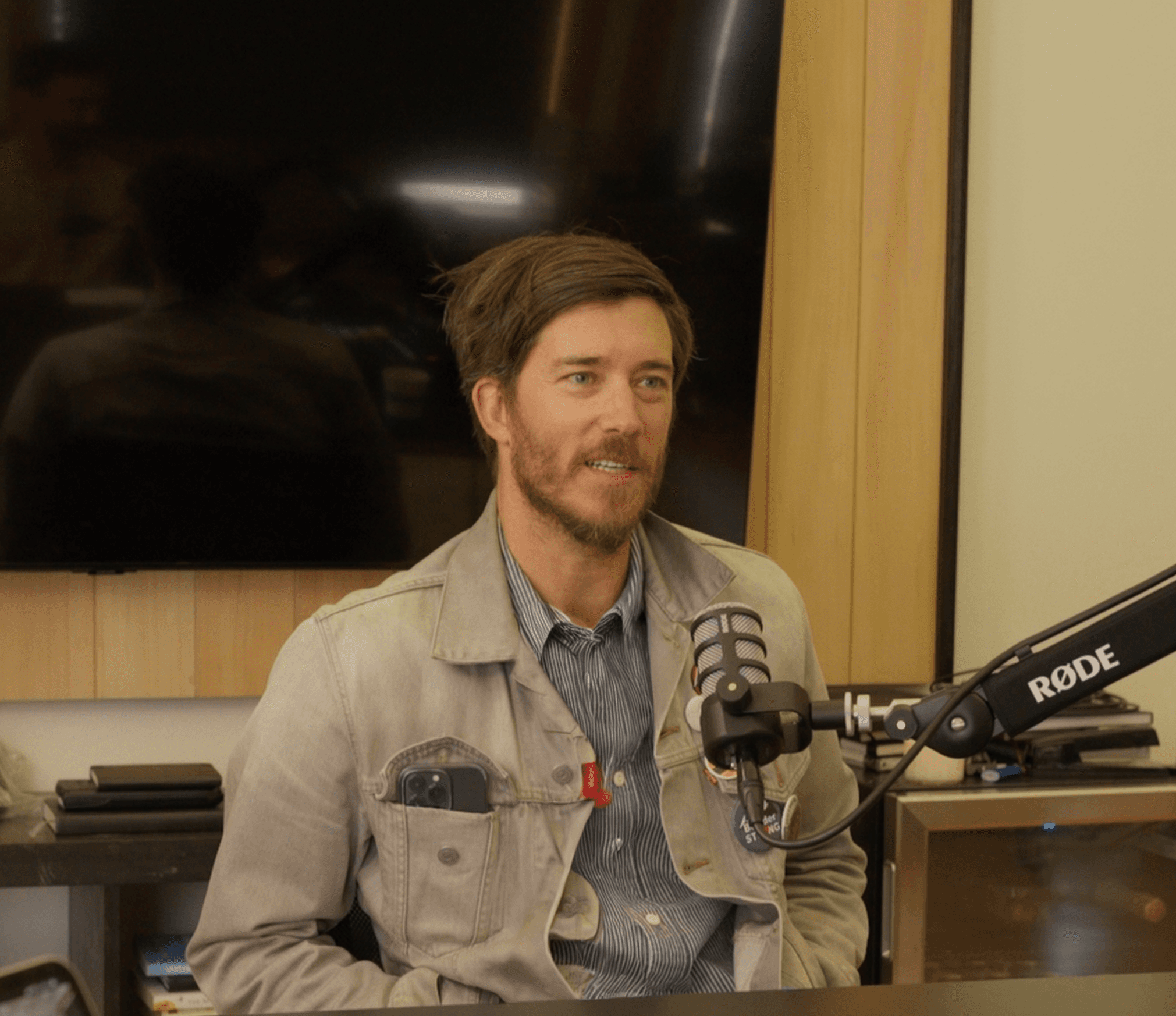
Principal of Flower Architecture
Nicholas "Nick" Fiore is the principal architect and founder of Flower Architecture, a Boulder-based design studio focused on creating thoughtful, functional, long-lasting spaces. With more than twenty years of experience across residential, commercial, civic, and multi-family projects, Nick blends strong design instincts with a grounded understanding of construction and how buildings actually work.
At Flower Architecture, he leads a small, client-focused practice that supports projects from early concept and interior design through contractor selection, construction documents, and site coordination. Nick is known for avoiding a rigid signature style. Instead, his work grows out of the needs of the client, the constraints of the site, and a commitment to honest, human-centered design.
Related Articles
Meet Alex Molkentin, a Boulder Custom Home Builder Focused on Discipline, Craft, and Accountability If you’re searching for a custom home builder in Boulder, Colorado, you’re not just looking for someone who can assemble materials. You’re looking for someone you can trust with your time, your investment, and your vision. My name is Alex Molkentin. I’m a builder and the owner of Fernhill. And Fernhill exists for a very specific reason.
When I started the podcast, I didn’t set out to build an audience or create “content.” I wanted to create space for conversations that were already happening quietly, between builders, architects, designers, and owners - about what actually works, what doesn’t, and why so much of residential construction feels harder than it needs to be. A year in, what surprised me most wasn’t how informative or enjoyable those conversations were. It was how often I walked away from an episode and immediately opened my business journal. Nearly every conversation challenged me to think more deeply about the industry, the way we structure teams, how trust is built, and what kind of work I actually want to be doing. These aren’t lessons tied to individual episodes. They’re patterns, principles that showed up repeatedly, from different perspectives, across different conversations.
As the holiday season approaches, I find myself doing what I try to do every year around this time—slow down for a moment. Not for work, not for deadlines, not for the next project waiting in pre-construction, but to simply take a breath and look around at everything we’ve been a part of this year. And what always comes into focus first isn’t the buildings. It’s the people. It’s easy in our industry to get lost in the schedules, the logistics, the budgets, and the details. But at the end of the day, our work isn’t just about structures—it’s about the humans who shape them, the clients who dream them, and the teams who bring them to life. That realization has been at the heart of Fernhill from the beginning, and this year, it feels more important than ever.